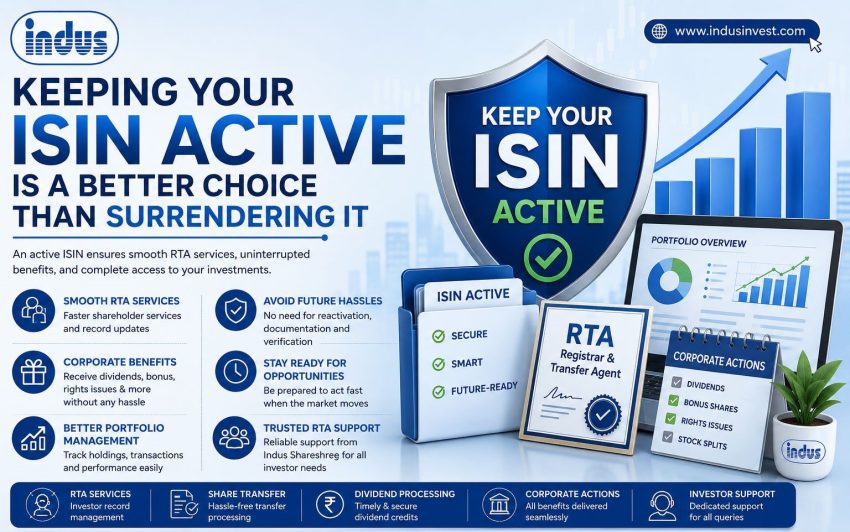
Why Issuer Companies Should Keep Their ISIN Active Instead of Surrendering It Complete Guide for Listed Companies, Unlisted Companies, NBFCs, Startups and Debt Listed Entities Introduction In the modern securities market ecosystem, an International Securities Identification Number (ISIN) is far more than a technical code allotted by depositories. For issuer companies, an ISIN represents the…
RTA Role in Section 8 & NBFC Compliance Services
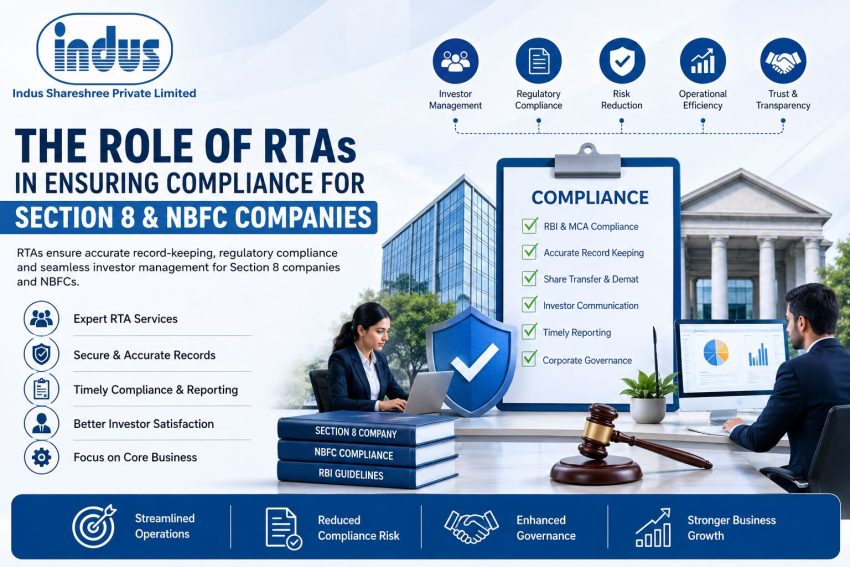
The Role of RTAs in Ensuring Compliance for Section 8 & NBFC Companies Introduction For Section 8 companies and NBFCs, maintaining regulatory compliance is not just a legal requirement – it is essential for building investor trust, avoiding penalties, and ensuring smooth business operations. This is where Registrar and Transfer Agents (RTAs) play a crucial…
Dematerialization Mandatory for Unlisted Companies as per MCA Rule 9A & 9B | Complete Compliance Guide
Dematerialization Mandatory for Unlisted Companies as per MCA Rule 9A & 9B | Complete Compliance Guide The Ministry of Corporate Affairs (MCA) has made it mandatory for specific categories of unlisted companies to obtain ISIN and convert their shares into dematerialised form. This requirement has been introduced through Rule 9A and Rule 9B. If your…
Dematerialization vs. Rematerialization – What Investors Should Know
What is Dematerialization? Dematerialization is the process of converting physical share certificates into electronic form, held in a Demat Account with a SEBI-registered Depository Participant (DP). Benefits of Dematerialization: Eliminates risk of loss, theft, or damage to physical certificates Enables faster transfer and settlement of securities Ensures direct credit of dividends, bonuses, and rights…